Impact
1 direct sales channel
An owned storefront alongside external music platforms.
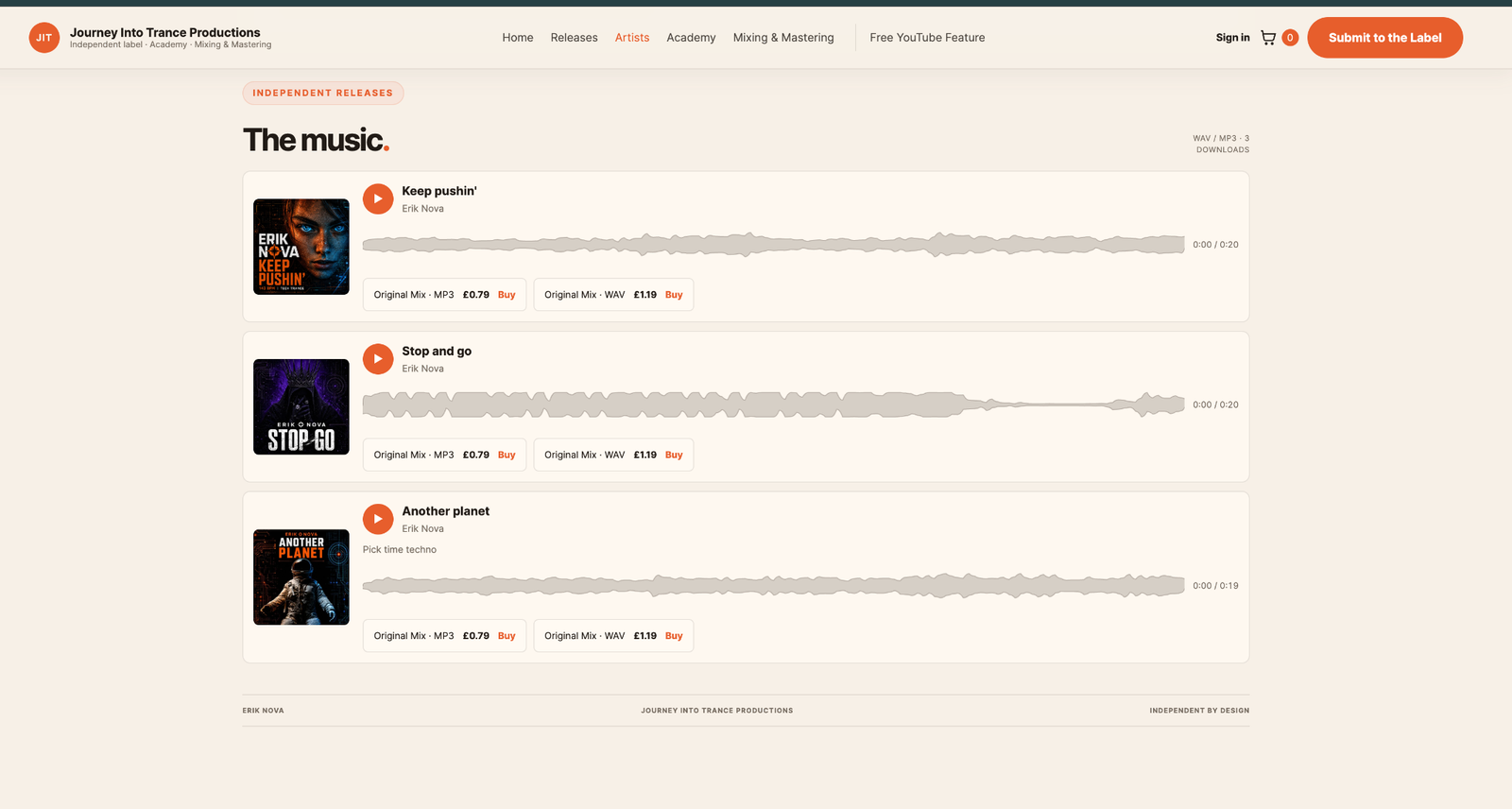
Previously, the label sold only through external channels that retained a share of sales. I designed and delivered a direct store where listeners can preview tracks, choose MP3 or WAV, pay and access their downloads. The client can independently publish artists and tracks, set prices and upload files.
30–40%
Store commission potentially avoided on direct sales
Indicative industry comparison, not JIT’s verified contract rate or measured savings. Distributor Cygnus Music reports receiving approximately 60–70% of download sale prices from stores such as Beatport, before its own distribution fee. Direct sales avoid the external store share; payment-processing fees, website costs and any applicable contractual obligations still apply. Source: Cygnus Music.
From first listen to final download
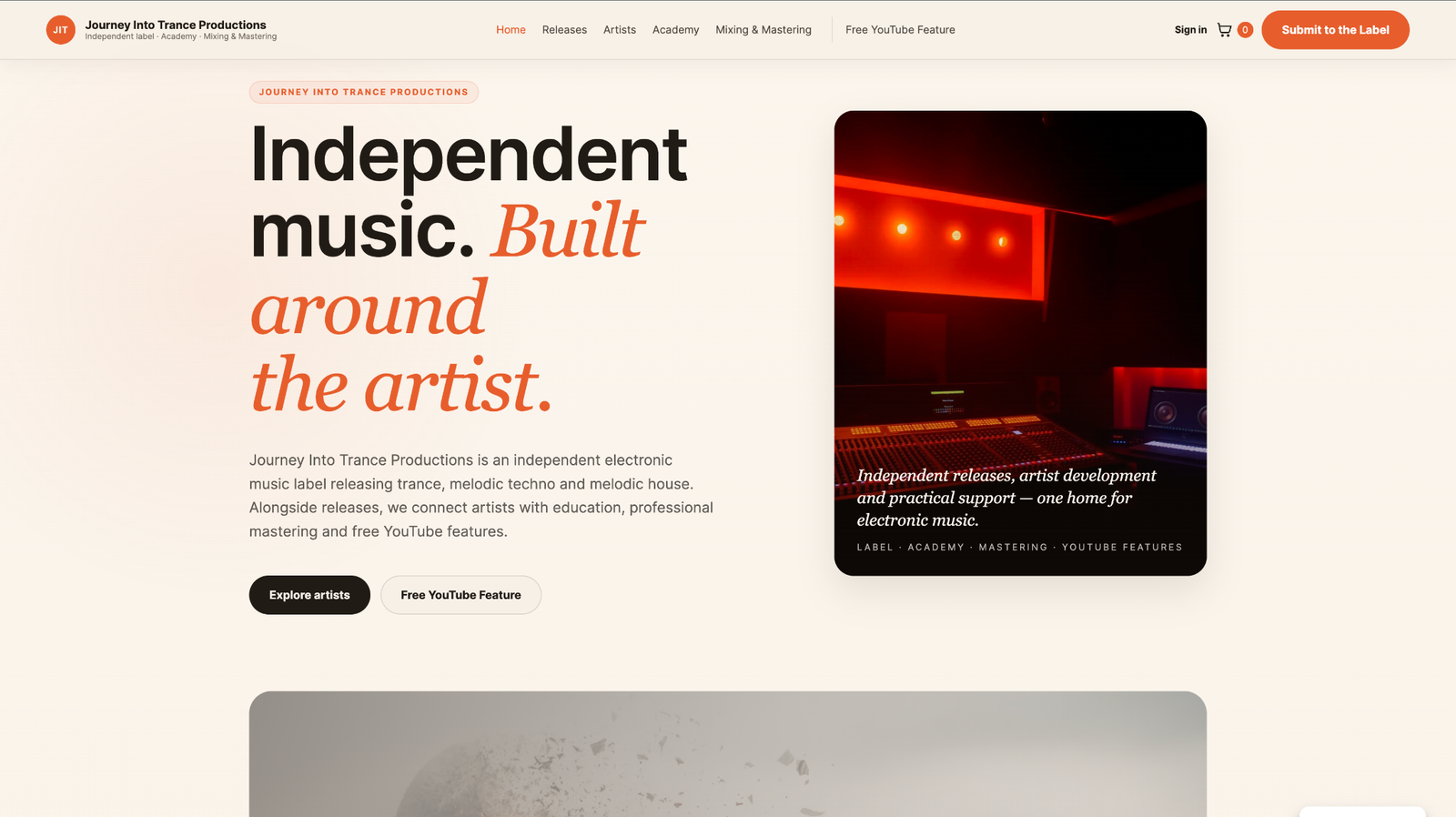
JIT Productions is an independent electronic music label. Its ecommerce site sells songs by its artists. People need to find a release, hear it, learn about the artist, choose a file format, pay and access their download afterwards.
I led UX and product design across competitor review, site structure, purchase flows, responsive UI, ecommerce behaviour, CMS design, implementation review, testing and launch. I reviewed independent labels and music platforms, then shaped the shop around how listeners decide to buy digital music.
The business problem
The label previously sold through external channels that retained a percentage of sales and needed a place to sell digital tracks directly, but a generic shop would leave out the listening and artist context that helps someone decide what to buy. I reviewed independent labels and music platforms to understand the expected journey, then treated discovery, payment and access to the file as one product experience.
Four decisions in the buying journey
- Explore the label first. Releases and artist pages support browsing while keeping the label's identity visible.
- Listen in context. Audio previews sit with each track, its artwork and artist rather than sending people away to hear it.
- Explain the file choice. MP3 and WAV are presented as options before checkout, with the selected format clear in the buying flow.
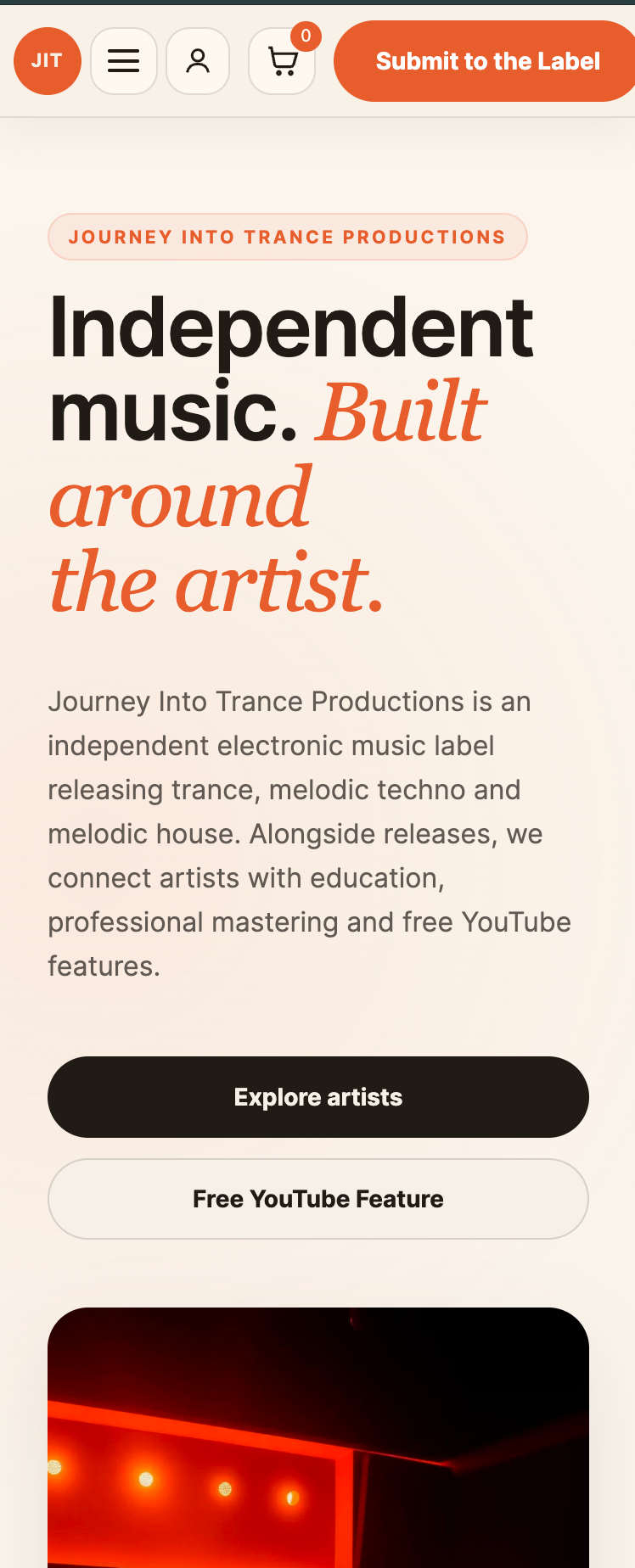
- Finish the journey. Guest checkout, payment, order emails and download access were considered together across desktop and mobile.
The trade-off behind the build
I did not want the label to depend on custom code for standard payment and order behaviour, or to force its release workflow into a generic shop editor. WooCommerce and the payment provider handle the established commerce tasks; the project-specific layer organises artists, tracks, formats and publishing controls. That choice kept custom work focused on the parts that make this label different.
The management experience
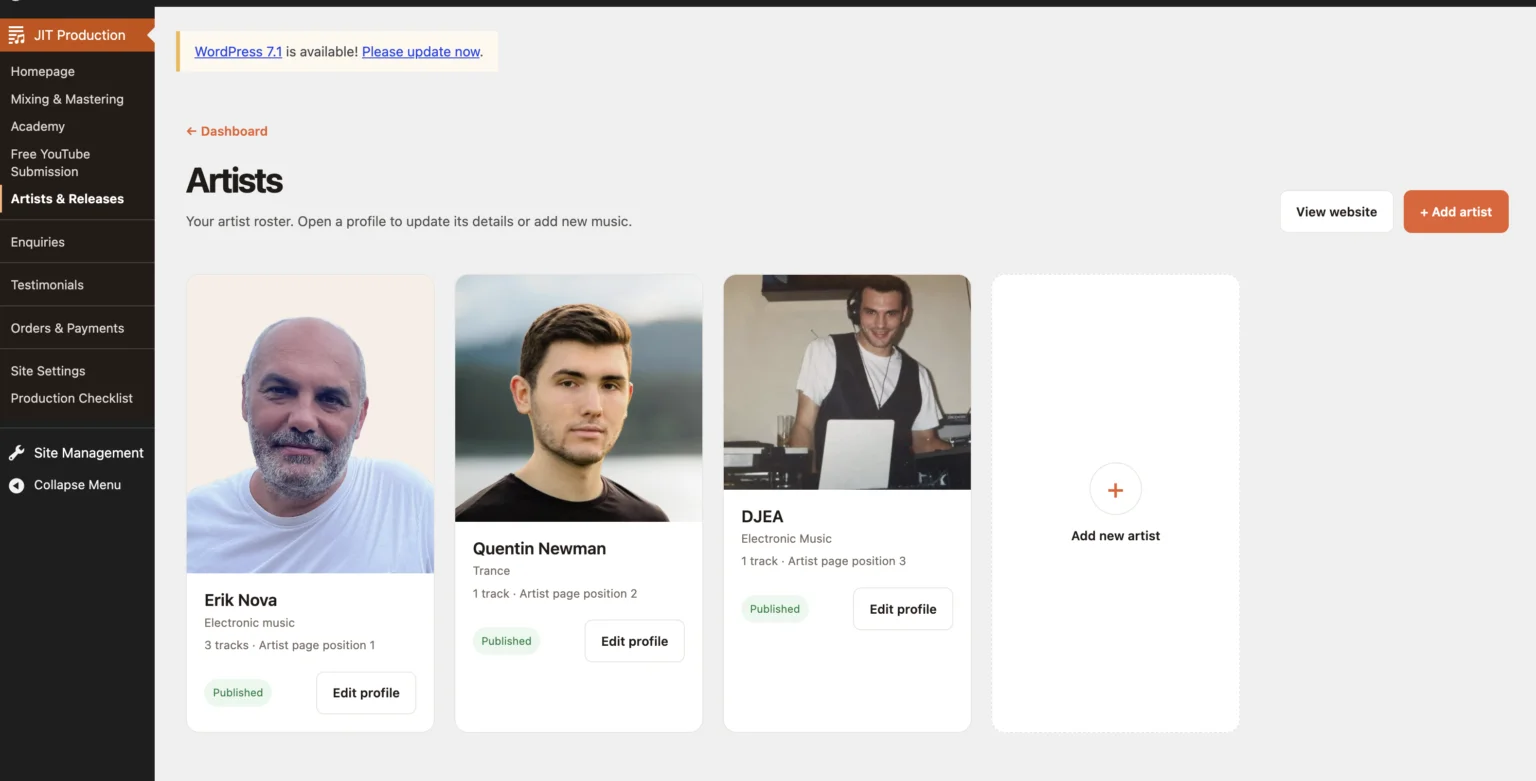
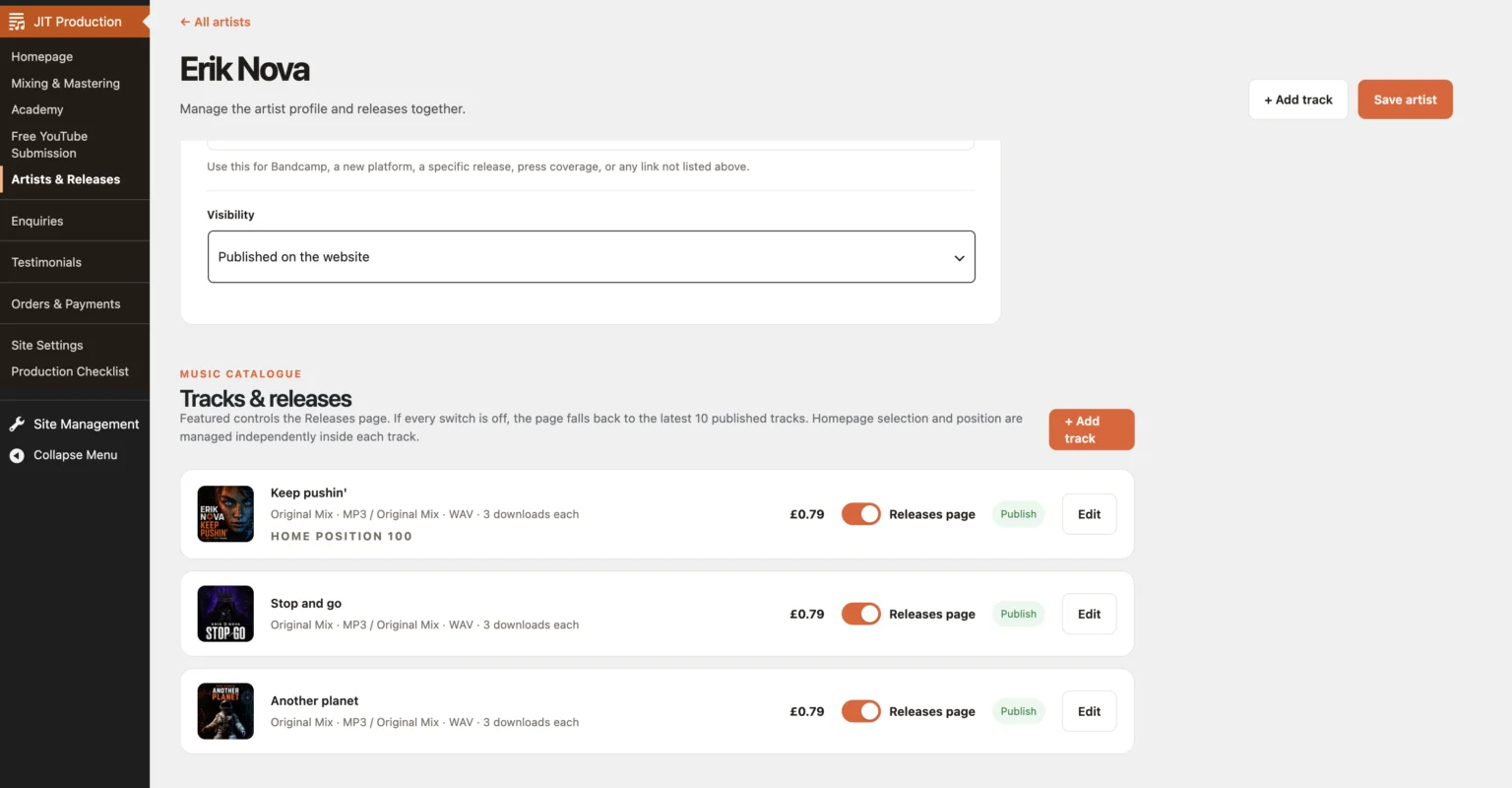
The shop and the editor were designed as one product. A label needs to manage artists, releases, homepage content, orders and downloads. I organised the custom WordPress area around those tasks, instead of making the team navigate unrelated default menus. The artist roster leads into each profile and its tracks; release controls show format, price, visibility and placement together.
The Nova plugin holds the project-specific controls. WooCommerce and the payment provider handle established ecommerce functions, leaving the custom layer focused on the label's content and workflow.
Outcome and reflection
The store launched with a complete route from listening to download. Testing a real purchase confirmed that payment, order communication and file access worked together. Next, I would examine where listeners leave the journey and whether buyers need help accessing their files. The main lesson was to treat the steps after payment as part of the customer experience. Visit JIT Productions.